


Get A Quote
Oil burners are a cornerstone of many industrial and commercial heating systems, directly impacting efficiency, operational costs, and system longevity. Choosing the right burner type is not merely a technical decision—it affects fuel consumption, emissions, and maintenance schedules. Among the most commonly used burners are pressure jet oil burners and rotary cup oil burners. While both are designed to atomize fuel oil for combustion, they employ fundamentally different technologies, each with distinct advantages and limitations. Understanding these differences is essential for selecting the optimal burner for your specific application.
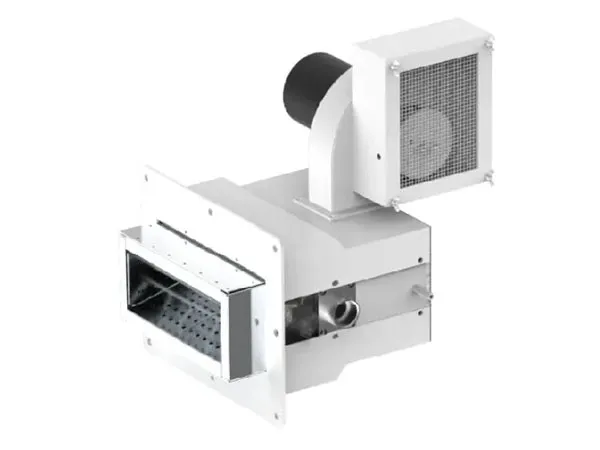
Pressure jet burners, often called solid stream burners, rely on high-pressure pumps to force fuel oil through a precision nozzle. The oil emerges as a cone-shaped spray and is broken into fine droplets for combustion.
Key Features of Pressure Jet Burners:
High-pressure atomization: Typically operates at 100–300 psi, producing a consistent spray pattern and stable flame.
Simple construction: Fewer moving parts make these burners easier to maintain and repair.
Reliable performance: Well-suited for small to medium boilers, particularly when heating demands are steady.
Maintenance considerations: Nozzle cleaning is critical. Accumulated deposits can disrupt the spray pattern, affecting combustion efficiency.
Ideal Applications:
Pressure jet burners excel in systems with consistent heating needs and relatively uniform fuel quality. They are especially cost-effective for smaller industrial boilers, commercial heating systems, or older installations where simplicity and reliability outweigh high-efficiency demands.
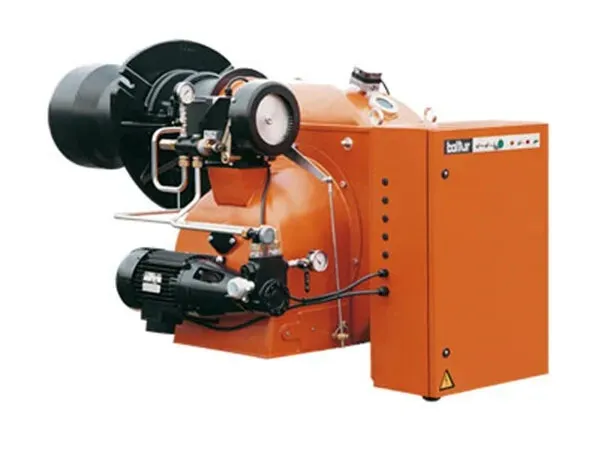
Rotary cup burners, sometimes called spinning cup burners, utilize a rotating disc or cup to atomize the oil. Fuel is fed into the center of a high-speed spinning cup, and centrifugal force flings it outward, forming a fine, uniform mist of droplets.
Key Features of Rotary Cup Burners:
Low-pressure operation: Usually operates below 60 psi, reducing pump stress.
Exceptional atomization: Fine droplets improve combustion efficiency and flame stability.
Fuel flexibility: Can handle heavier oils, variable grades, and even less refined fuels.
Higher initial investment: Complex mechanics, including the spinning cup and drive motor, raise upfront costs.
Maintenance considerations: Requires periodic inspection and servicing of the cup and motor system to maintain optimal performance.
Ideal Applications:
Rotary cup burners are preferred for high-capacity industrial boilers, large furnaces, and systems requiring precise combustion control. Their fine atomization enhances fuel efficiency, lowers emissions, and ensures cleaner operation over time.
|
Feature |
Pressure Jet Burner |
Rotary Cup Burner |
|||
|
Atomization Method |
High-pressure spray through nozzle |
Centrifugal force via spinning cup |
|||
|
Operating Pressure |
High (100–300 psi) |
|
|||
|
Fuel Compatibility |
Light to medium oils |
Light, medium, and heavy oils
|
|||
|
Maintenance |
Regular nozzle cleaning |
Cup and motor servicing |
|||
|
Efficiency |
Moderate |
High |
|||
|
Ideal Applications |
Small to medium boilers |
Large boilers, industrial furnaces
|
Selecting the appropriate burner involves careful consideration of multiple factors:
Fuel Type and Quality: Heavy or variable-grade oils perform better with rotary cup burners. Pressure jet burners work best with consistent, lighter oils.
Boiler Size and Capacity: Large boilers benefit from rotary cup burners due to their higher efficiency and stable flame quality.
Maintenance Capabilities: Pressure jet burners are simpler and less costly to maintain, but require frequent nozzle inspections. Rotary cup burners demand more technical upkeep but reward operators with improved efficiency.
Operational Efficiency Goals: If reducing fuel consumption and emissions is a priority, rotary cup burners usually offer superior performance.
For Pressure Jet Burners: Schedule regular nozzle inspections and cleaning. Using a fuel pre-filter can reduce clogging and prolong nozzle life.
For Rotary Cup Burners: Ensure the spinning cup and motor are free from wear and residue. Regularly check alignment and RPM to maintain optimal atomization.
General Advice: Regardless of burner type, maintaining clean fuel, proper air-fuel ratio, and routine inspection are key to long-term efficiency and safety.
Understanding the fundamental differences between pressure jet and rotary cup oil burners is crucial for industries relying on oil-fired heating systems. Pressure jet burners offer simplicity, reliability, and cost-effectiveness for smaller or steady-demand applications. Rotary cup burners provide superior atomization, fuel flexibility, and efficiency, making them ideal for large-scale industrial operations or systems with variable fuel requirements.
By carefully evaluating your boiler size, fuel type, operational goals, and maintenance capacity, you can select the burner that maximizes performance, reduces operating costs, and ensures long-term system reliability. Investing in the right burner not only enhances efficiency but also promotes safer, cleaner, and more sustainable industrial heating operations.
High Altitude Industrial Burner Performance: Adjustments for Thin Air
2026-10-12Biomass Industrial Burners: Wood Pellets vs Agricultural Waste for Steam
2026-10-05Industrial Burner Replacement: Key Specs to Match Your Furnace Design
2026-09-28Solving Cold Start Issues in Large Industrial Burners: Preheating Strategies
2026-09-21Address: Room 504, Building 11, Wuzhou International Industrial Expo City, Old National Highway 310, Xigong District, Luoyang City, Henan Province
E-mail: shuxin@sxburner.com
Phone: +86 15516359168
Take every customer request seriously.
Shuxin
Electromechanical
+86 15516359168
shuxin@sxburner.com
Room 504, Building 11, Wuzhou International Industrial Expo City, Old National Highway 310, Xigong District, Luoyang City, Henan Province
+86 15516359168
shuxin@sxburner.com
Room 504, Building 11, Wuzhou International Industrial Expo City, Old National Highway 310, Xigong District, Luoyang City, Henan Province