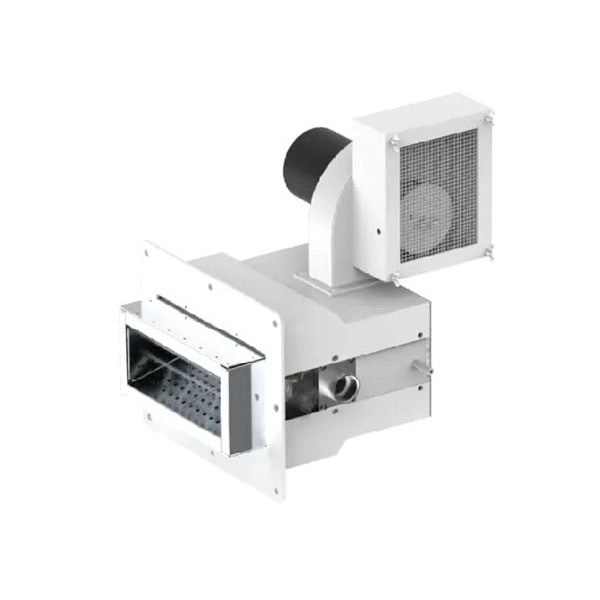
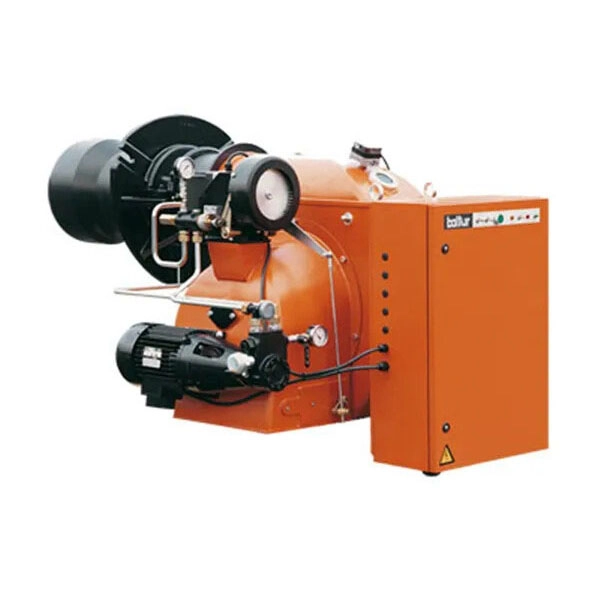
A new industrial oil burner is a capital decision that touches fuel budgets, emissions compliance, downtime risk and, ultimately, plant output. Plant managers who treat the burner as a commodity item usually pay for it later through unstable flames, high excess air, nozzle fouling and slow spare-part delivery. This guide covers the criteria that actually decide performance: heat input and turndown, fuel quality, atomization method, control architecture and after-sales support. It is written for the person who signs the specification, not for the catalogue. By the end you will have a practical checklist to bring into any supplier conversation, including the questions that separate a genuine combustion partner such as SHUXIN from a box-moving reseller.
Start With the Heat Balance, Not the Burner Catalogue
The most common specification error is oversizing. A burner selected at twice the required firing rate will short-cycle, soot its nozzle and waste fuel on every purge. Before opening a single datasheet, establish the real duty:
- Net process heat required at design conditions, not at average conditions
- Thermal efficiency of the downstream equipment (boiler, air heater, furnace, dryer)
- Radiative and convection losses from the chamber and ductwork
- Cold-start and warm-up demand, which is often the true peak
- Altitude and combustion air temperature, both of which reduce available oxygen mass
From those figures you derive the required firing rate range. The range matters more than the single peak number, because most plants operate well below design load for the majority of the year. A burner that cannot turn down cleanly will run inefficiently precisely when efficiency is easiest to capture.
The Five Specifications That Decide Real-World Performance
1. Fuel specification and viscosity
Oil is not a single product. Light diesel, heavy fuel oil, waste oil and various blends behave very differently at the nozzle. Record the actual viscosity at the atomizing temperature, the sulphur and ash content, water content, and whether preheating is available. Heavy grades require heated storage, heated lines and a heater sized with margin, not sized to the nominal figure on the certificate of analysis.
2. Atomization method
Pressure-jet, rotary-cup and air- or steam-assisted atomizers each have a niche. Pressure-jet units are simple and inexpensive but sensitive to viscosity changes. Rotary-cup handles a wider viscosity band and is tolerant of minor contamination. Air and steam assist produce finer droplets and better combustion of heavy grades, at the cost of a compressed-air or steam supply that must be available every hour the burner runs.
3. Turndown ratio and modulation
A stated turndown of 10:1 is only useful if flame shape, atomization quality and emissions remain stable at the low end. Ask for test data across the full range, not just at high fire. Fully modulating control with oxygen trim typically delivers better fuel savings than a two-stage arrangement, but only where the load swings frequently enough to justify the instrumentation.
4. Combustion air and excess oxygen
Every percent of unnecessary excess air carries heat up the stack. The design goal is to hold excess oxygen as low as flame stability and carbon monoxide limits allow, across the whole firing range. This requires matched air and fuel curves, a properly sized forced-draft fan, and air dampers with real resolution rather than on/off actuation.
5. Controls and safety interlocks
The burner management system is where liability lives. Confirm that flame detection, pre-purge timing, fuel valve proving, low-oil-temperature and low-oil-pressure interlocks, and post-purge behaviour meet the codes your insurer and local authority require. A modern controller should also expose firing rate, stack temperature and alarm history for trending, because unrecorded faults repeat.
Comparing Options Against Your Operating Reality
Once the duty and fuel are fixed, the shortlist usually comes down to two or three configurations. Weigh them on the criteria that affect your shift team, not on the brochure:
- Pressure-jet, single or two-stage: lowest capital cost, easiest to maintain, best for clean light oil and stable loads.
- Pressure-jet, fully modulating: better seasonal efficiency, more components to tune, needs oxygen trim to justify itself.
- Rotary-cup: broad viscosity tolerance, good for heavy grades and sites with variable fuel quality, requires careful cup maintenance.
- Air or steam assisted: finest atomization and lowest emissions on heavy fuel, but demand a reliable auxiliary utility.
- Duplex or dual-fuel: useful where oil is the standby for gas, with added valving and changeover logic to test regularly.
Emissions and Permit Conditions
Check the permit before the purchase order, not after. Nitrogen oxide and particulate limits vary by jurisdiction, fuel and chamber geometry, and the same burner can pass in one furnace and fail in another. Ask the supplier for reference installations burning comparable fuel in a comparable chamber, and request the emission test reports. Where limits are tight, flue gas recirculation, staged combustion or water-in-fuel concepts may be needed, and each changes the maintenance regime.
Choosing a Supplier: Questions Worth Asking
Hardware quality is only half the purchase. The rest is whether the supplier will still answer the phone in year three. Before signing, ask:
- Will you review our heat balance and chamber drawing, or just quote from our firing rate?
- Can you supply the nozzle, electrode, flame sensor and controller spares we will consume annually?
- What is the committed lead time for those spares, in writing?
- Who commissions the burner, and does that person have authority to adjust the fuel-air curves on site?
- What training do you provide for our boiler operators?
Suppliers with genuine engineering depth answer these without hesitation. SHUXIN, for example, builds its industrial oil burner range around combustion engineering support rather than catalogue sales, which matters when a site needs a fuel-air curve re-tuned after a fuel source change rather than a replacement unit.
Installation, Commissioning and the First 90 Days
Most burner problems surface in the first quarter. Budget for a combustion analyser and a trained technician during commissioning, and record baseline data at low, mid and high fire: oxygen, carbon monoxide, stack temperature, fuel pressure and flame signal strength. Re-measure at 30 and 90 days. A drift in flame signal or a rise in stack temperature is an early warning that pays for itself long before a failure does.
Establish a maintenance interval based on operating hours and fuel quality, not on a calendar. Nozzles, filters, electrodes and flame sensors are consumables; treating them as such prevents the far more expensive failure of a pressure vessel or a process shutdown.
Total Cost of Ownership Beats Purchase Price
Fuel is the dominant lifetime cost of any oil-fired installation, often by an order of magnitude over the equipment itself. A burner that is two percent more efficient but costs more up front will usually repay the difference within the first heating season, and continue to pay afterwards. Build the comparison around fuel consumption at your actual load profile, plus spares, service visits, downtime exposure and any permit-related testing. When that calculation is done honestly, the decision becomes straightforward.
Frequently Asked Questions
Can I replace an existing burner without changing the furnace front? Often yes, but the flame envelope, throat geometry and chamber dimensions must be checked. A burner that fits physically can still produce an unacceptable flame shape.
Is a higher turndown always better? No. Extremely low firing rates can cause flame impingement or unstable combustion. Match turndown to your real load distribution.
How often should combustion be re-tuned? After any fuel source change, any significant mechanical repair, and at least once per maintenance cycle with a calibrated analyser.
Approached as an engineering exercise rather than a purchasing transaction, an industrial oil burner decision is manageable and predictable. Fix the heat balance, match the atomization and controls to your fuel and load profile, verify emissions against your permit, and choose a supplier who will still be available when the tuning is needed. That sequence protects the fuel budget, the uptime target and your own credibility with the plant team.
 English