


Get A Quote
Industrial burners operating at high altitudes face a distinct set of challenges. As elevation increases, atmospheric pressure drops, reducing the oxygen density available for combustion. This phenomenon, often referred to as ‘thin air,’ directly impacts flame stability, heat output, and emission levels. Without proper adjustments, equipment may underperform, consume more fuel, or even violate environmental regulations. Engineers and facility managers responsible for burner systems in mountainous regions or elevated industrial sites need targeted solutions. This article examines the specific performance issues caused by high altitude and outlines the critical adjustments required to maintain efficiency and reliability. Drawing on proven engineering principles and real-world applications, we will also highlight how SHUXIN integrated burner systems are designed to adapt seamlessly to these demanding environments.
At elevations above 1,000 meters (approximately 3,280 feet), the effects of reduced oxygen become significant for industrial combustion processes. The fundamental issue is that the same volume of combustion air contains fewer oxygen molecules, which alters the stoichiometry of the fuel-air mixture.
With less oxygen available per unit volume, the flame requires a larger air volume to achieve complete combustion. If the burner is not re‑calibrated, the flame can become unstable, exhibiting lift-off, flicker, or even blowout. This instability not only threatens process continuity but also poses safety risks in industrial settings. SHUXIN burners incorporate advanced flame sensors and gas‑flow modulation that automatically compensate for oxygen deficits, maintaining a robust and stable flame across a wide altitude range.
A burner tuned for sea‑level conditions will deliver less heat at altitude because the lower oxygen concentration reduces the reaction rate. The result is a drop in thermal output, often by 3–5% per 1,000 meters of elevation gain, depending on the fuel and design. This inefficiency forces operators to increase fuel flow just to meet process demands, driving up operational costs. Proper adjustment of air‑fuel ratios and burner geometry can restore heat output close to sea‑level performance. SHUXIN’s engineering team designs systems with altitude‑specific tuning parameters to ensure consistent thermal power regardless of site elevation.
Incomplete combustion at altitude leads to elevated carbon monoxide (CO) and unburned hydrocarbon emissions. Additionally, the higher fuel flow needed to compensate for oxygen deficiency can increase nitrogen oxide (NOx) formation due to higher peak flame temperatures in certain combustion zones. Many industrial regions enforce strict emission limits, making high‑altitude compliance a growing concern. SHUXIN provides low‑NOx and ultra‑low‑NOx burner configurations that incorporate air‑staging and flue‑gas recirculation, tailored specifically for thin‑air environments to meet local environmental standards.
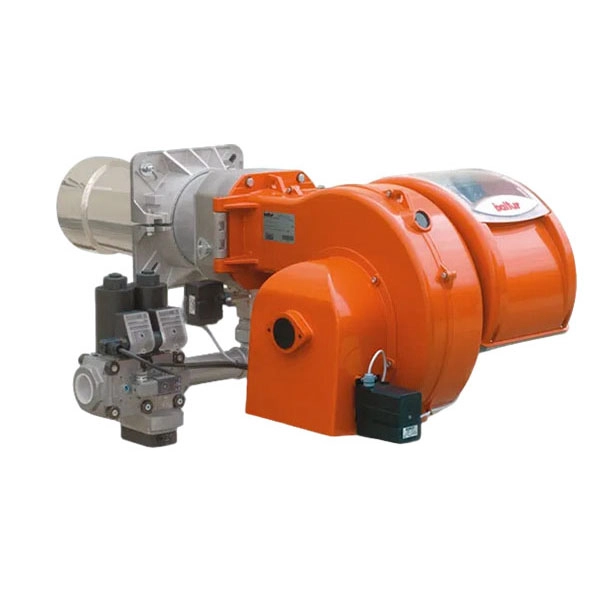
Successfully adapting an industrial burner to high‑altitude operation involves a systematic set of hardware and control modifications. The following adjustments are commonly applied on both new installations and retrofits.
The most fundamental adjustment is recalibrating the combustion air supply. Because the air is less dense, the burner must move a larger volume of air to maintain the correct oxygen‑to‑fuel ratio. This is typically done by adjusting fan speed, damper positions, or installing a higher‑capacity combustion air blower. SHUXIN burners are equipped with precision metering valves and digital control loops that allow fine‑tuning of the air‑fuel ratio based on site‑specific barometric pressure. The ratio is often set to a slightly leaner mix (more air relative to fuel) to ensure complete combustion and improve flame stability.
Changing the burner nozzle or flame retention head can significantly improve performance at altitude. A higher‑pressure drop across the nozzle helps maintain proper fuel atomization and mixing even when ambient air is thin. For gas burners, adjusting the gas orifice diameter or using a multi‑spud design can alter the flame velocity and shape. SHUXIN offers a range of interchangeable nozzle kits that allow quick field conversion for different altitude bands. The goal is to achieve a compact, stable flame with good heat transfer characteristics, reducing the need for excess fuel.
In some cases, the standard combustion air fan may not deliver enough mass flow at high altitudes. Upgrading to a variable‑speed drive (VFD) fan or a larger impeller can provide the necessary airflow. Additionally, the location of the air intake matters: drawing air from a cooler, denser source (if available) can improve performance. SHUXIN’s engineered packages include optional booster fans and intake ducting designed to optimize air density and reduce parasitic losses.
SHUXIN has developed a comprehensive approach to high‑altitude burner performance that goes beyond simple field adjustments. Our systems are designed from the ground up to address the physics of thin‑air combustion.
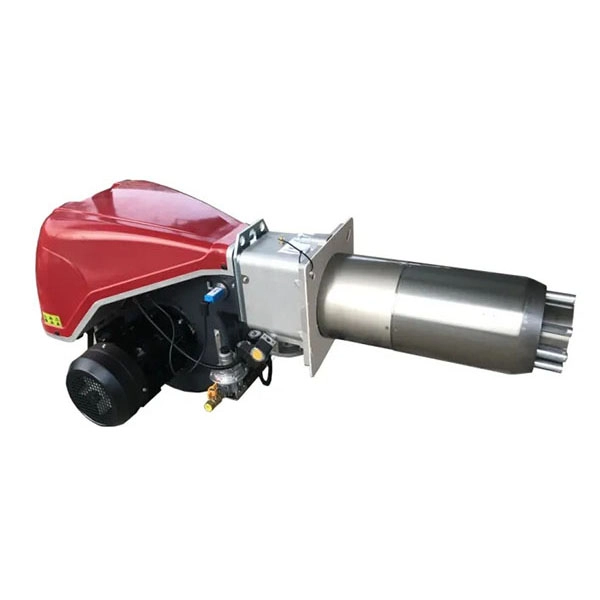
Operating an industrial burner at high altitude requires deliberate engineering adjustments to overcome reduced oxygen density. Without proper tuning, operators face flame instability, lower heat output, and higher emissions. Key measures include recalibrating air‑fuel ratios, modifying nozzles, and enhancing combustion air supply. SHUXIN provides a complete solution with altitude‑specific designs, advanced controls, and proven field performance. By partnering with SHUXIN, industrial facilities in mountainous regions can achieve reliable, efficient, and compliant combustion—even in the thinnest air.
High Altitude Industrial Burner Performance: Adjustments for Thin Air
2026-10-12Biomass Industrial Burners: Wood Pellets vs Agricultural Waste for Steam
2026-10-05Industrial Burner Replacement: Key Specs to Match Your Furnace Design
2026-09-28Solving Cold Start Issues in Large Industrial Burners: Preheating Strategies
2026-09-21Address: Room 504, Building 11, Wuzhou International Industrial Expo City, Old National Highway 310, Xigong District, Luoyang City, Henan Province
E-mail: shuxin@sxburner.com
Phone: +86 15516359168
Take every customer request seriously.
Shuxin
Electromechanical
+86 15516359168
shuxin@sxburner.com
Room 504, Building 11, Wuzhou International Industrial Expo City, Old National Highway 310, Xigong District, Luoyang City, Henan Province
+86 15516359168
shuxin@sxburner.com
Room 504, Building 11, Wuzhou International Industrial Expo City, Old National Highway 310, Xigong District, Luoyang City, Henan Province