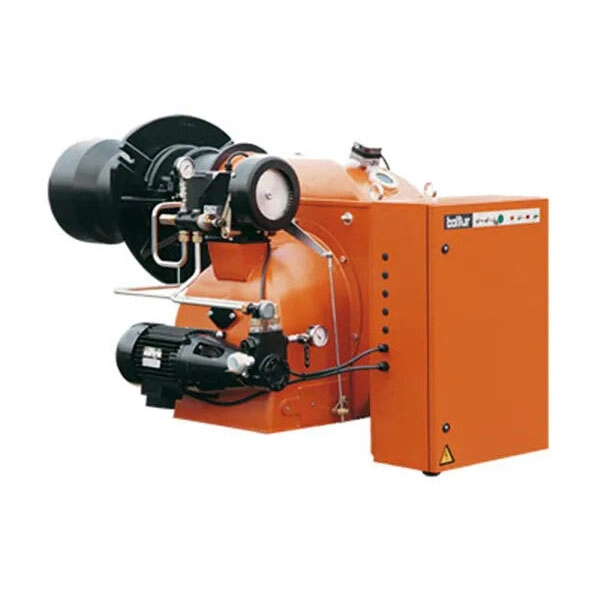
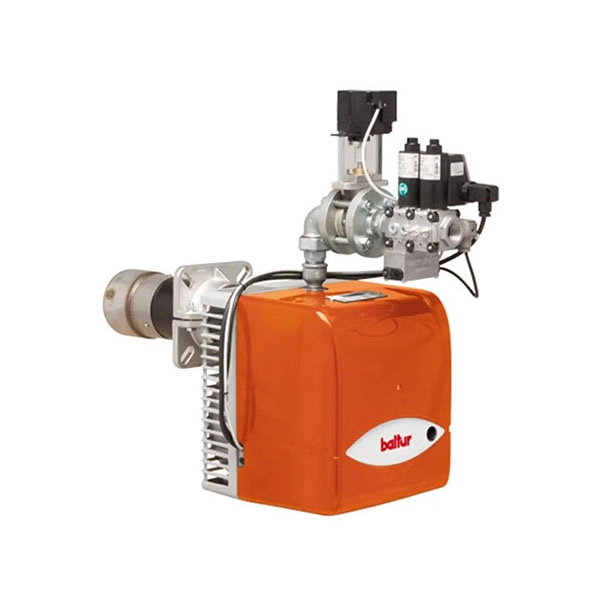
For industrial operators facing increasingly stringent EPA emission regulations, the challenge is clear: reduce nitrogen oxide (NOx) emissions to mandated levels without sacrificing the thermal output that drives production. Traditional combustion technologies often force a trade-off—cleaner flames typically mean lower heat release or compromised stability. However, advancements in burner engineering, particularly from SHUXIN, now allow facilities to achieve compliance while maintaining—or even enhancing—output. This article examines how low NOx industrial burners bridge this gap, focusing on the design principles and operational strategies that make simultaneous emission control and high performance possible.
Understanding EPA NOx Regulations and Their Impact on Industrial Burners
The EPA’s Clean Air Act and regional air quality mandates have progressively lowered NOx emission limits across industrial sectors. For process heaters, boilers, and furnaces, permissible NOx levels often range from 30 ppm to as low as 9 ppm (corrected to 3% O₂), depending on fuel type and equipment size. Meeting these thresholds requires precise control of flame temperature and oxygen availability.
Traditional burners achieve high output by operating at elevated flame temperatures, which inherently favor thermal NOx formation via the Zeldovich mechanism. Reducing temperature alone lowers output. The engineering challenge lies in modifying combustion dynamics to suppress NOx without sacrificing the firebox heat release that powers industrial processes.
How SHUXIN Low NOx Burners Achieve EPA Compliance Without Output Loss
SHUXIN has developed a family of industrial burners that integrate multiple low NOx technologies specifically designed to decouple emission reduction from throughput limitation. The core principles include:
- Staged combustion: Fuel and air are introduced in distinct phases, creating a primary rich zone and a secondary lean zone. This lowers peak flame temperature while preserving overall heat release.
- Internal flue gas recirculation (FGR): Combustion products are recirculated within the burner, diluting the flame and reducing oxygen concentration at the reaction zone—cutting NOx by up to 70% compared to non-recirculating designs.
- Advanced air-fuel ratio control: Precise metering of oxidizer and fuel maintains stoichiometry near ideal lean-burn conditions, minimizing thermal NOx spikes during load changes.
- Optimized flame geometry: Specially designed nozzle and swirler configurations shape the flame to improve heat transfer efficiency, so less fuel is needed to achieve the same heat flux.
Real-world performance data from SHUXIN installations show that these burners consistently achieve sub-9 ppm NOx (corrected to 3% O₂) on natural gas while delivering up to 15% more useful heat per unit of fuel compared to previous-generation burners. This is possible because the recirculated gases not only suppress NOx but also increase radiative heat transfer through higher CO₂ and H₂O concentrations within the flame envelope.
Key Design Differentiators of SHUXIN Burners
To further understand how SHUXIN avoids the typical output penalty, consider three specific engineering choices:
- Variable vane geometry – Allows real-time adjustment of air swirl intensity, maintaining flame stability even at turndown ratios exceeding 10:1.
- Dual-fuel capability – Burners can seamlessly switch between natural gas and propane/butane without reconfiguration, ensuring backup fuel sourcing does not spike emissions.
- Integrated combustion monitoring – SHUXIN burners ship with embedded sensors for O₂, CO, and NOx, enabling closed-loop control that optimizes burn automatically.
Comparative Advantages: SHUXIN vs. Conventional Low NOx Solutions
To appreciate why SHUXIN burners are preferred by operators who cannot afford output reduction, the following table summarizes critical performance dimensions:
SHUXIN Low NOx Burner Advantages
- NOx emission levels: Consistently below 9 ppm (3% O₂ correction) for natural gas – meets even the most stringent EPA regional requirements
- Thermal efficiency: 94%+ at rated load; minimal excess air requirement (2-3%) reduces stack losses
- Turndown ratio: 10:1 without flame instability or CO breakthrough – ideal for variable production processes
- Retrofit compatibility: Standard flange dimensions allow drop-in replacement of existing burners without windbox modifications
- Maintenance cost: Robust refractory-free design lengthens intervals between overhauls; no moving parts in the hot zone
Application Scenarios and Integration Support
SHUXIN low NOx burners are deployed across a wide spectrum of industries, including:
- Chemical processing – fired heaters requiring precise temperature profiles and uniform heat flux
- Refining – process furnaces where fuel flexibility and high on-stream factor are essential
- Food & beverage – steam boilers that must maintain rapid load-following response
- District heating – large water-tube boilers with seasonal demand swings
Each installation is preceded by a SHUXIN engineering site assessment, including CFD modeling of the existing furnace to predict flame behavior and heat transfer after burner replacement. This ensures that the promised output is actually achieved in the field. SHUXIN also provides commissioning support and remote optimization services to fine-tune control parameters for site-specific fuel properties.
Frequently Asked Questions About Low NOx Burners and Output
Will installing a low NOx burner reduce my steam production or process heat?
Not if the burner is properly designed. SHUXIN burners use staged combustion and internal FGR to lower flame temperature without reducing the total heat released. In many cases, the improved heat transfer profile actually raises overall thermal efficiency, meaning you can produce the same output with less fuel.
How do SHUXIN burners compare to external FGR systems?
External FGR systems require separate ductwork, dampers, and fans, adding capital cost and pressure drop. SHUXIN’s internal FGR eliminates these components, reducing installation complexity and operating cost while achieving the same NOx reduction.
Can SHUXIN burners be used with heavy fuel oil?
Yes. SHUXIN offers models designed for liquid fuels, using air-assisted atomization and staged mixing to maintain low NOx performance even with high-viscosity fuels. Contact SHUXIN for specific fuel compatibility.
Conclusion: Meeting EPA Standards Without Tradeoffs Is Achievable
The era of sacrificing output for emission compliance is over. Through advanced combustion science and precision engineering, SHUXIN low NOx industrial burners demonstrate that it is possible to meet EPA standards—even the most demanding sub-9 ppm limits—while preserving and in some cases enhancing thermal output. Facility managers and plant engineers who invest in SHUXIN technology gain a dual advantage: regulatory certainty and operational excellence. To learn how a tailored SHUXIN solution can optimize your specific process, contact the engineering team for a free combustion assessment.
 English